How SVdP helps the vulnerable beat the summer heat
Accompanying the poor doesn’t slow down in the summer – in fact, like the temperatures, the Society of St. Vincent de Paul’s efforts to help those in need heats up.
Across the country, Vincentians utilize innovative ways to be present to those who suffer most from the brutal summer heat. These can range from direct one-on-one care to highly innovative community-supported programs.
These efforts are part of the Vincentian mission to meet the manifestations of poverty and homelessness with innovation, persistence and love and to see the face of Christ in each person they serve. The need has reached new heights, as 2024 saw the highest number of people experiencing homelessness person in any given night – 771,480, or 23 of every 10,000 people.
“In extreme heat, access to cold water, air conditioning, or cooling centers isn’t a luxury—it’s a lifeline,” said Stephen Uram, National Director of Poverty Programs for SVdP USA. “For our neighbors experiencing homelessness or hardship, the Society of St. Vincent de Paul is often their only source of relief. As temperatures rise, so does the urgency to respond with compassion and care.”
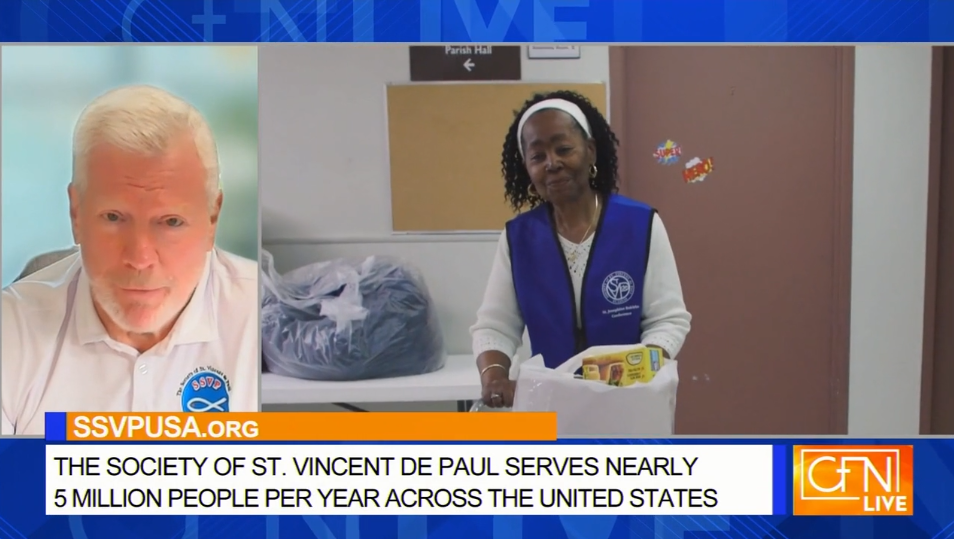
Three Councils from one of the country’s largest Catholic lay organizations, serving an average of 5 million people a year, showcase examples of both the inventiveness and consistent presence of Vincentians wherever the need exists.
Phoenix
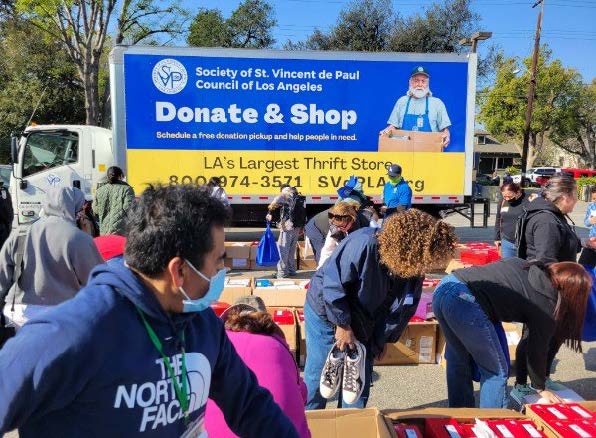
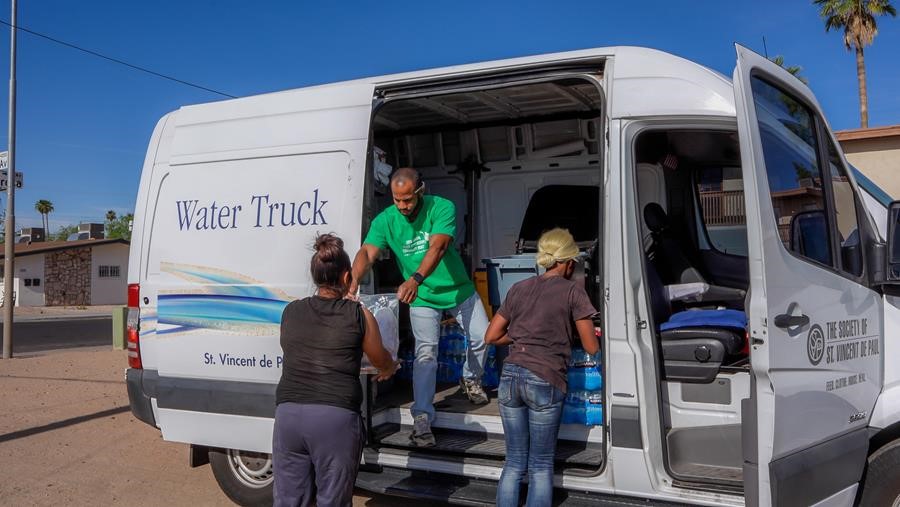
Being the face of Christ and seeing the face of Christ amidst 120-degree temperatures has been a life’s calling for more than a decade for Joseph Yanez. He leads the effort for SVdP Phoenix’s Celebrity Fight Night water truck.
“The idea was to hydrate individuals out in the community, in encampments, in abandoned houses, alleys, in the river beds,” said Yanez.
It has become far more, an across-the-board donation program for people in one of America’s hottest metropolitan areas.
“We do hygiene kits. It consists of everything you could possibly need right now in the element of heat, chapstick, sunscreen, caps, socks, toothbrushes, soap,” said Yanez. “Then comes the clothing, gently used, shoes, shirts, pants.”
Yanez says people consistently step up to empower his council in meeting those critical needs, so much so that his teams have 25 delivery and drop-off routes throughout the Valley of the Sun.
“I’ve got schools, preschools, that call me up and say, ‘Can you pick up this leftover food?’” the selfless Yanez says.
Northern Kentucky
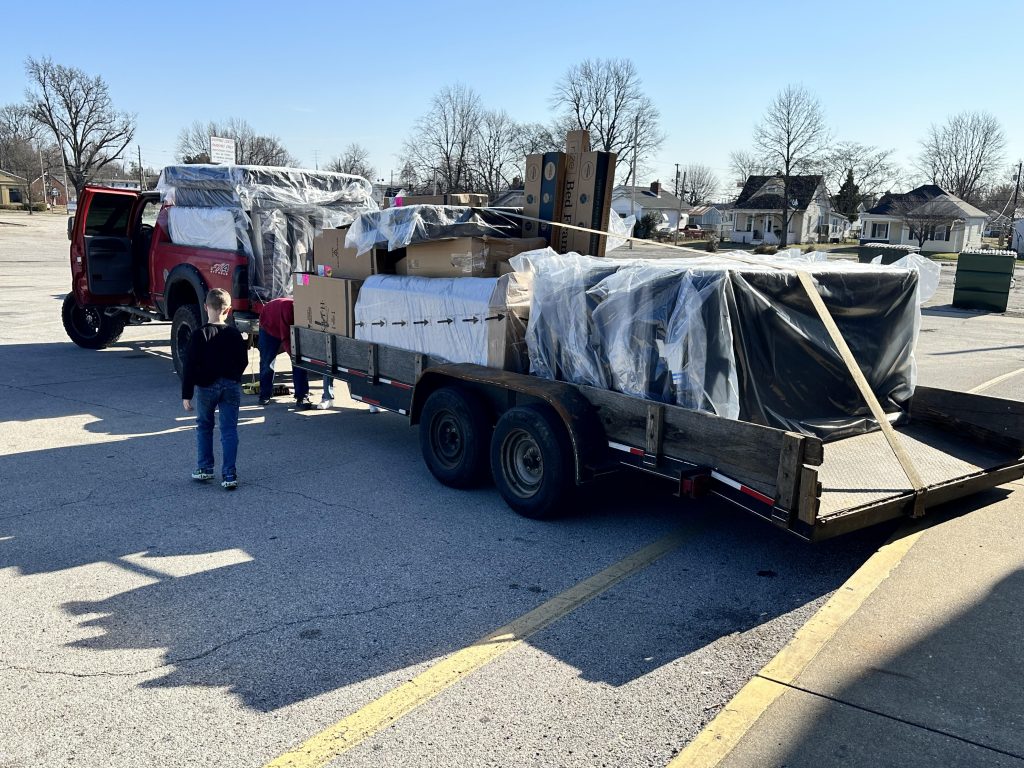
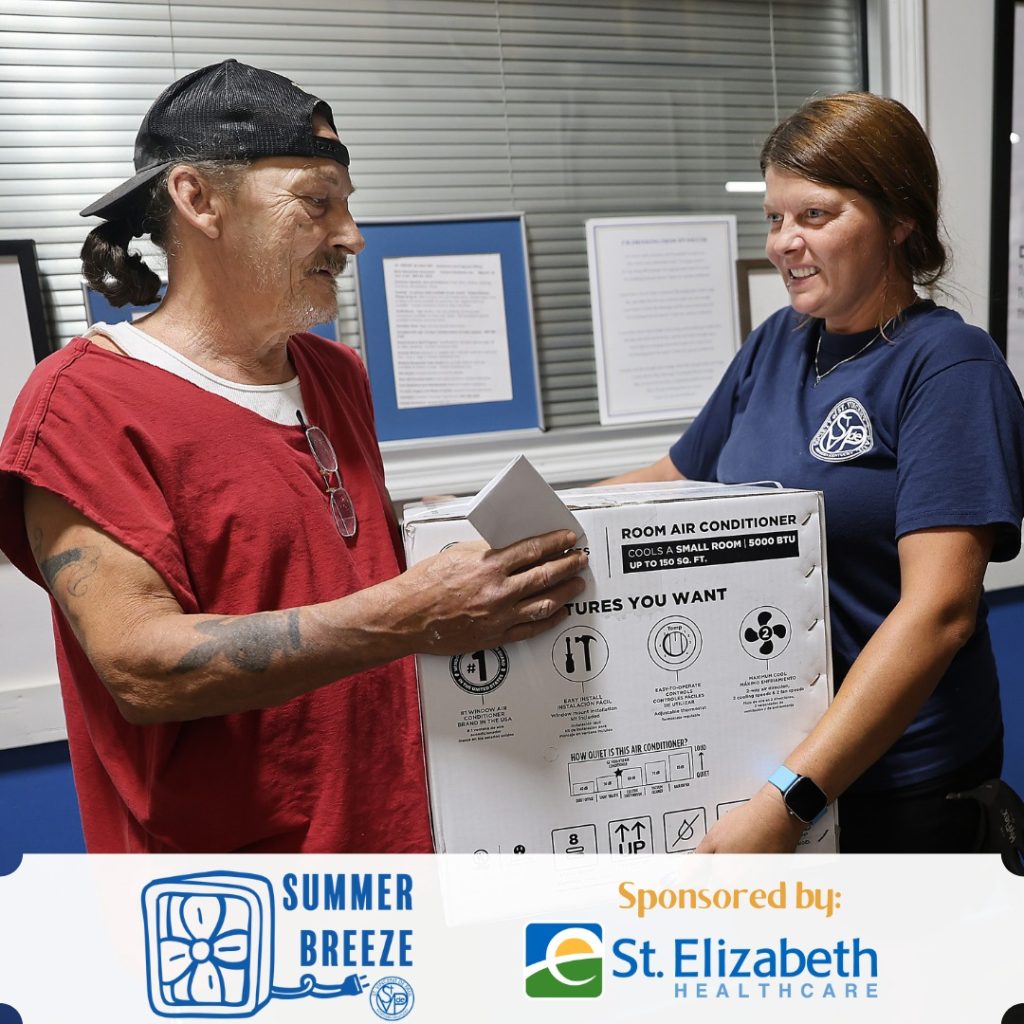
For more than 25 years, SVdP Northern Kentucky has responded to extreme temperatures with a kind of summer heat donation program that most charities don’t necessarily offer: Free air conditioners.
“When the heat and humidity hits, it can be a struggle, especially if you have a chronic medical condition that you’re trying to manage,” said Karen Zenge, the executive director of the Council located just south of Cincinnati.
“It’s called the social determinants of health. Providing air conditioning, providing relief from the heat and humidity, allows you to breathe better. If you can breathe better, you can be healthier.”
They partner with Saint Elizabeth Healthcare, a local medical provider, to offer hundreds of free air conditioners and fans per year to those in critical need.
They usually go pretty quickly.
“We ran out two weeks ago, during the hottest week of the summer where people really needed it,” she said, adding that Arlinghaus Plumbing, Heating and Air Conditioning found out about their dramatic need.
“They saw that post, reached out and said ‘We have $5,000 that we can contribute. How many fans and ACs can that get you?’ We were able to get another 150 units.”
“I belong to many families, including Saint Vincent de Paul. I’m the type of guy that if you need help…at the drop of the dime, I’ll be there. We practice what we preach.”
Belleville, Illinois
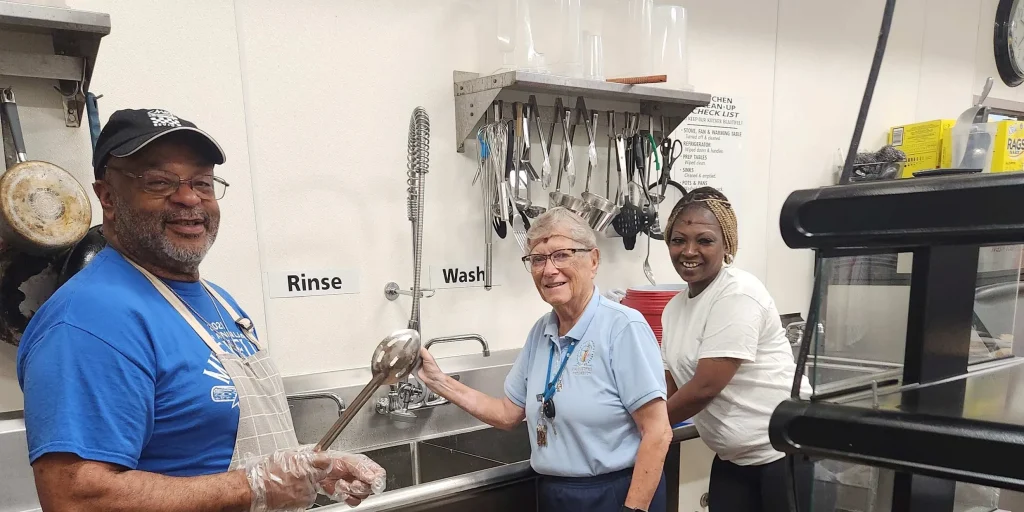
“We are a ministry that’s open 365 days a year,” says Belleville District Council Executive Director Pat Hogrebe. “We never close.”
SVdP Belleville serves several areas including the often-underserved citizens of East St. Louis. Vincentians there enter into what she calls a “constant battle” to keep people safe during the summer, beyond meals and water.
“You might think about people that are in their homes, but they are at risk because their utility bills are so high. Today I had a young lady have [power] disconnected. If we didn’t do something, she’d have been turned off, someone with little kids that’s in a house without power. We prevented the utility from getting turned off,” she said.
“It’s all a labor of love.”
—————
To learn about more ways Vincentians serve the most vulnerable year round, along with how you can join the mission, visit www.svdpusa.org.